
Norse mythology is often remembered for its mighty Gods, terrifying giants, heroic warriors, magical weapons, and epic battles. But beneath the thunder of Thor’s hammer and the glory of Valhalla lies a much darker world. Norse mythology is filled with stories of betrayal, doomed love, murder, revenge, loss, and inevitable destruction.
Unlike many traditions in which the Gods can ultimately escape death, the Norse Gods know that their world has an ending. Even the greatest among them cannot completely escape fate. This sense of unavoidable tragedy gives Norse mythology much of its distinctive character.

1. The Death of Baldr: The Beginning of the End
Perhaps the most famous tragedy in Norse mythology is the death of Baldr, the beloved son of Odin and Frigg.
Baldr was associated with beauty, goodness and radiance. According to the story preserved most fully in Snorri Sturluson's Prose Edda, Baldr began having terrifying dreams about his own death. His mother, Frigg, became so worried that she travelled throughout the world and obtained promises from nearly every living thing that they would never harm her son.
The Gods then amused themselves by throwing weapons at Baldr, confident that nothing could hurt him.
But one thing had been overlooked: mistletoe.
Loki discovered the weakness and fashioned a weapon from the plant. He then persuaded Baldr's blind brother Höðr to throw it. The mistletoe struck Baldr, killing him.
The Gods were devastated. Frigg attempted to rescue her son from Hel, but there was one final obstacle: everything in existence had to weep for Baldr. Almost everything did. Yet a giantess called Þökk (perhaps Loki in disguise) refused, and Baldr therefore remained among the dead.
His death marks the beginning of the chain of events leading toward Ragnarök. Modern scholarship continues to regard the Baldr story as one of the central tragedies of Norse mythology.

2. Sigurd and Brynhild: Love Destroyed by Betrayal
The tragedy of Sigurd and Brynhild belongs to the heroic mythology preserved in the Poetic Edda and related traditions.
Sigurd was one of the greatest heroes of the Germanic legendary tradition. After killing the dragon Fáfnir, he gained enormous fame and treasure. Yet his greatest battles were ultimately emotional rather than physical.
Sigurd had encountered Brynhild, a powerful warrior woman and valkyrie-like figure. The two became connected through love and promises, but deception and manipulation eventually separated them.
Sigurd became involved with Gudrun, while Brynhild was married to another man. The complicated relationships between Sigurd, Brynhild, Gudrun, and the powerful Gjúkung family eventually produced jealousy, resentment, and revenge.
Sigurd was murdered, and Brynhild's grief became overwhelming. In some versions, she chose to die alongside him.
The story is tragic because nobody really wins. Love turns into suspicion, suspicion into betrayal, and betrayal into murder. Even the heroes of Norse legend cannot escape the consequences of broken promises.
The Elder Edda preserves several of these heroic traditions, including the stories of the doomed Völsung family, Brynhild, Sigurd, and Gudrun.

3. The Punishment of Loki
Loki is one of the most complicated figures in Norse mythology. He can help the Gods, but he can also deceive them and create disasters.
After Baldr's death, Loki's position among the Gods becomes impossible as all Gods rightfully deemed him responsible. He eventually flees and is captured. The punishment that follows is horrific. The Gods bind Loki beneath the earth with chains made with the entrails of his sons Vali and Nari (or Narfi). A poisonous serpent is placed above him so that venom drips onto his face. Loki's wife, Sigyn, remains beside him and catches the poison in a bowl.
When the bowl becomes full, Sigyn leaves briefly to empty it, letting venom fall onto Loki's eyes. His resulting convulsions are said to cause earthquakes.
The story is tragic not merely because Loki suffers, but because it represents the final collapse of his relationship with the Gods. Loki, once an indispensable companion, becomes their enemy.
His punishment also foreshadows Ragnarök, when he will break free and fight against the Gods.

4. Fenrir: The Wolf Who Was Never Trusted
The story of Fenrir is another tragedy built around fear and prophecy.
Fenrir was the enormous wolf born to Loki and the giantess Angrboða. The Gods learned that Loki's children would eventually become enemies of the divine order. Fenrir therefore became something they feared.
The Gods attempted to bind him three times with different chains, but Fenrir broke them all. Eventually the dwarves created Gleipnir, a magical binding made from seemingly impossible ingredients, including the sound of a cat's footsteps and the roots of mountains.
Fenrir agreed to be bound only if one of the Gods placed a hand in his mouth as a guarantee of good faith. Tyr volunteered. When Fenrir realized that he could not escape, he bit down, severing Tyr's hand.
Fenrir was then imprisoned.
The tragedy lies in the fact that Fenrir's violence was partly created by the Gods' fear of what he might become. They treated him as a future monster, and their treatment helped create the hostility they feared.
At Ragnarök, Fenrir will break free and kill Odin before eventually being killed by Odin's son Víðarr.

5. The Death of Odin
Odin is the most powerful of the Gods, yet even he cannot escape fate.
The Völuspá foretells the destruction of the Gods during Ragnarök. Odin will face Fenrir, the enormous wolf he once helped imprison.
Despite his wisdom, Odin cannot prevent the prophecy, and Fenrir kills him in battle, swallowing him.
This is one of the great ironies of Norse mythology. Odin spends much of his existence searching for knowledge. He sacrifices an eye for wisdom, hangs himself on the World Tree in pursuit of runic knowledge, and consults seers about the future.
Yet knowing the future does not allow him to change it.
Odin's tragedy is therefore deeply philosophical: knowledge does not necessarily provide power over destiny.

6. Thor's Final Battle
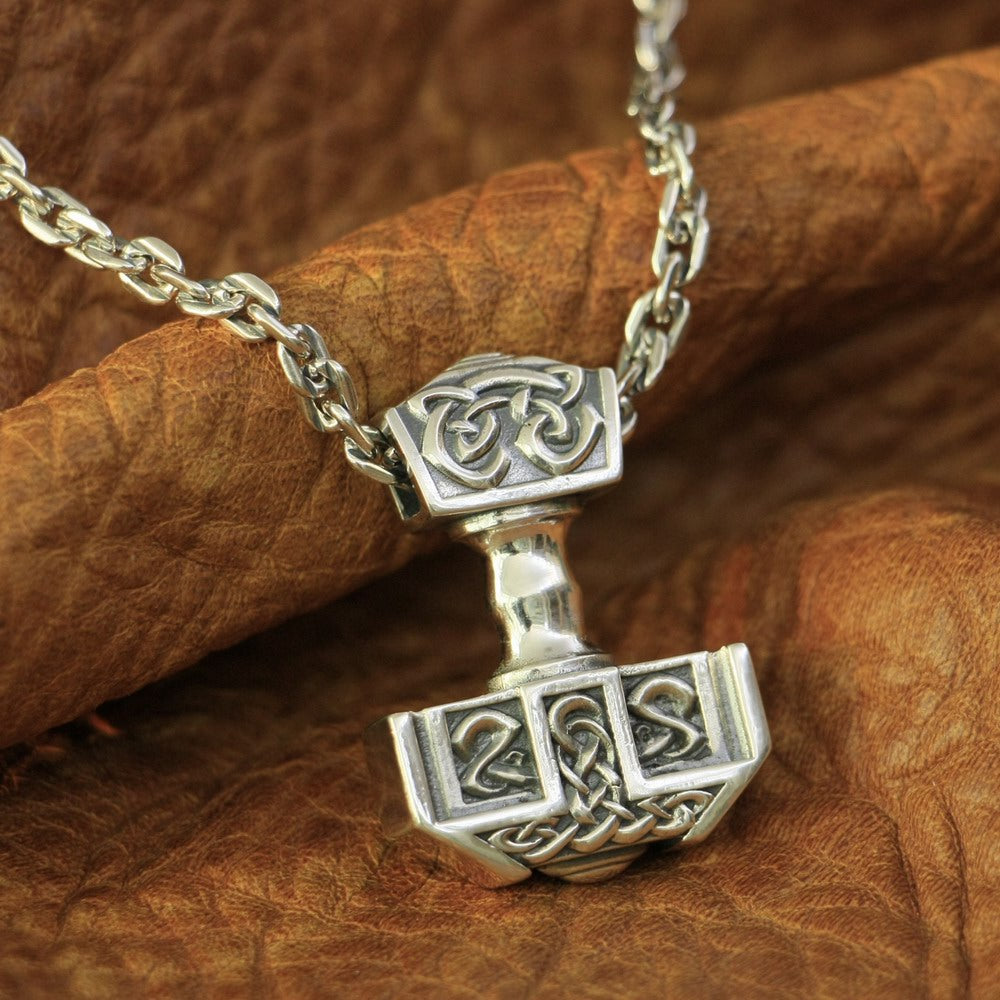
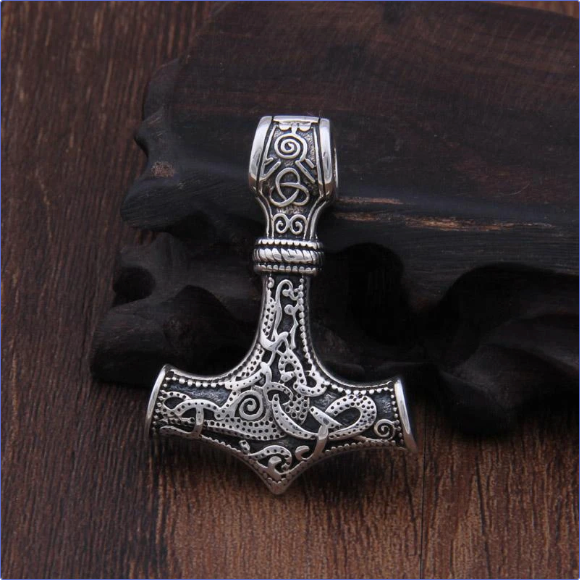
Thor is traditionally portrayed as the great defender of the Gods and humanity. He defeats giants and monsters and protects the cosmic order with his hammer Mjölnir.
But even Thor has a destined enemy: Jörmungandr, the Midgard Serpent.
The two encounter one another several times, and their final confrontation occurs at Ragnarök.
Thor succeeds in killing the serpent. But Jörmungandr's venom is fatal. After taking nine steps away from his enemy, Thor collapses and dies.
There is something almost heroic and heartbreaking about this ending. Thor wins his final battle—but victory does not save him.
His death demonstrates one of the defining themes of Norse cosmos: victory demands sacrifice.

7. Ragnarök: The Ultimate Norse Tragedy
All these individual tragedies ultimately lead toward the greatest tragedy of all: Ragnarök.
The Gods know that Ragnarök is coming. The Poetic Edda describes a world of terrible omens, social collapse, monstrous enemies, battles, and fire. Odin dies. Thor dies. Loki and Heimdall kill each other. Tyr fights Garm. Freyr faces the giant Surtr and falls.
The world itself is consumed by flames and sinks beneath the sea.
For an instant all was silent.
After the destruction, the world rises again. Some Gods survive, including Baldr, who returns from the realm of the dead. Líf and Lífþrasir, two human survivors, emerge to repopulate the renewed world.
This makes Ragnarök more complicated than a simple apocalypse. Destruction is followed by renewal.

Why Are Norse Myths So Tragic?
The deepest lesson of the Norse cosmos is that death cannot be avoided, but courage is a choice.
The Gods know their destiny, yet they continue to fight. Odin seeks knowledge even though he cannot escape his fate. Thor continues protecting the world despite knowing that his final battle will kill him. The Gods mourn Baldr even though his death forms part of a future they cannot prevent.
Heroism does not mean winning forever. It means standing against destruction even when victory is impossible.
That may be the central lesson of these tragic stories: fate may determine the ending, but it does not necessarily determine how one faces it.

Bibliographical References
Sturluson, Snorri. The Prose Edda: Tales from Norse Mythology. Translated and introduced by Jesse L. Byock. Penguin Classics, 2006. ISBN-13: 978-0140447552.
Orchard, Andy, ed. and trans. The Elder Edda: A Book of Viking Lore. Penguin Classics, 2011. ISBN-13: 978-0140435856.
Larrington, Carolyne, trans. The Poetic Edda. Oxford World's Classics, Oxford University Press, 2019. ISBN-13: 978-0198834571.