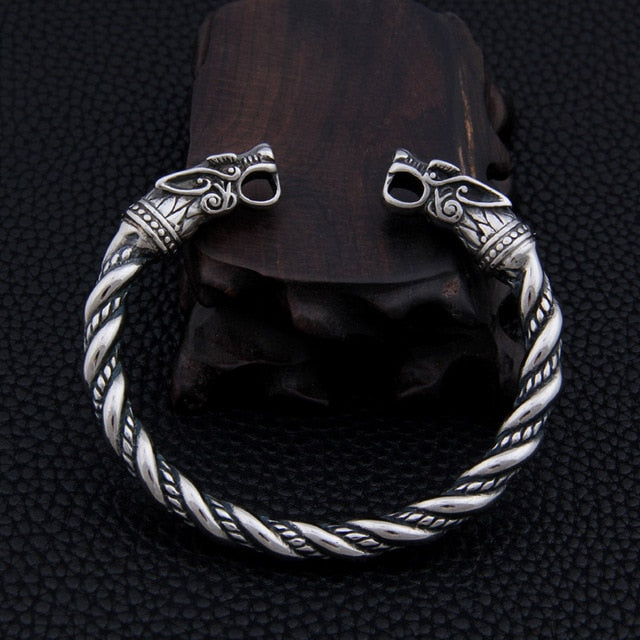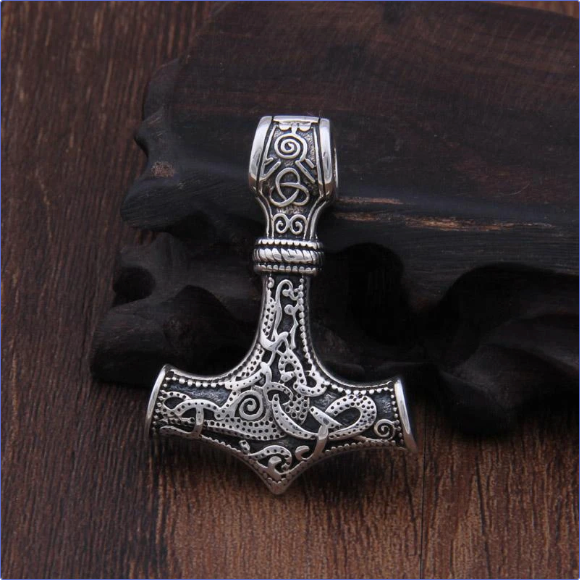

The Viking Age is traditionally said to have begun in AD 793, when Scandinavian raiders attacked the monastery of Lindisfarne on the northeast coast of England. The event shocked the Christian world and became one of the most famous episodes of the early medieval period. Yet Lindisfarne did not suddenly create the Vikings. Scandinavian sailors, traders, warriors, and explorers had already been active across northern Europe for generations.
The beginning of the Viking Age was therefore not caused by a single event. Instead, it emerged from a combination of maritime technology, economic opportunity, political change, social competition, population pressures, trade networks, and the vulnerability of wealthy settlements across Europe. Modern archaeology increasingly shows that the Viking expansion was a gradual transformation rather than a sudden explosion of violence.

Lindisfarne and the Traditional Beginning of the Viking Age
The year 793 remains the conventional starting point because of the attack on Lindisfarne. The monastery was an important Christian religious center and possessed considerable wealth. Its isolated coastal position also made it an attractive target for seaborne raiders.
The attack was particularly disturbing to contemporary Christian observers because monasteries were regarded as sacred places. The raid demonstrated that an enemy could arrive unexpectedly from the sea, strike quickly, seize valuables and captives, and disappear before a local army could respond.
However, Lindisfarne was not the first Scandinavian attack on Britain. In AD 789, a group of seaborne Scandinavians arrived near Portland in southern England. The local royal official approached them, apparently believing that they were merchants and tried to collect taxes, which led to an early and bloody demise. Other attacks followed during the 790s, including raids on Ireland, Scotland, Francia, and other coastal regions.
This means that 793 is better understood as a symbolic date than as the precise moment when the Viking Age began.

The Longship: The Technology That Made Expansion Possible
One of the most important ingredients in the Viking expansion was the development of highly effective Scandinavian ships.
Viking ships were not simply war machines. Their shallow drafts allowed them to travel through rivers, estuaries, and coastal waters, while their sails made long-distance journeys considerably faster than purely oar-powered vessels.
This combination gave Scandinavian crews an extraordinary degree of mobility. They could cross the North Sea, navigate along unfamiliar coastlines, enter rivers, and reach settlements that were difficult to attack from land.
The importance of ships went beyond raiding. They enabled trade, migration, exploration, communication, colonization, and warfare. Archaeological evidence indicates that long-distance maritime networks were already flourishing before the conventional beginning of the Viking Age.
The trading settlement of Ribe in Denmark, for example, developed during the early eighth century. Other Scandinavian trading centers emerged around the Baltic and North Sea. Archaeological evidence from Ribe also demonstrates long-distance movement of materials from northern Scandinavia before the major Viking raids began.
The Vikings therefore did not suddenly learn how to sail across the sea in 793. They inherited and developed a maritime tradition that was already well established.

Trade Came Before Raiding
Trade may be one of the most important pieces of the puzzle.
Scandinavian communities were already participating in international commerce before the Viking Age. Northern European trading networks connected Scandinavia with Britain, Francia, the Baltic, and regions farther east.
Merchants transported valuable commodities such as furs, hides, walrus products, amber, iron, weapons, textiles, and other goods. In return, Scandinavians gained access to silver, glass, ceramics, luxury objects, and foreign products.
These commercial journeys also provided something else: information.
Scandinavian sailors learned where wealthy settlements were located, how to reach them, which rivers were navigable, and where defenses were weak. The earliest Viking raids were therefore probably connected to knowledge acquired through earlier commercial and maritime contacts.
Recent archaeological research suggests that Scandinavian activity in the western seas began before the famous raids of the 790s. Evidence from Norway indicates that some seafarers may have explored routes toward Britain and Ireland during the later eighth century.
In this sense, Viking raiding can be viewed partly as an extension of an already existing maritime world.

Political Change in Scandinavia
Political developments within Scandinavia may also have helped push warriors toward overseas activity.
During the late eighth and ninth centuries, larger and more powerful political structures were emerging in parts of Scandinavia. Local chieftains and competing rulers increasingly had to negotiate, compete, or submit to stronger leaders.
Political consolidation could create a paradox. As powerful rulers established greater control at home, opportunities for traditional warfare and plunder within Scandinavia became more restricted, and a warrior who could no longer gain wealth and prestige through local conflict would instead seek opportunities abroad.
One recent interpretation argues that growing royal authority along the Norwegian coast may have disrupted existing relationships between warriors, traders, and rulers. Overseas raiding consequently offered some ship commanders a new way to obtain wealth and independence.

Wealth and the Attraction of European Monasteries
Another obvious factor was the enormous concentration of wealth in Western European religious institutions.
Monasteries and churches frequently possessed silver, gold, precious vessels, jewelry, textiles, books, and other valuable objects. Many were located near the coast or along rivers and had limited military protection.
For the Vikings, this presented an extraordinary opportunity.
A successful expedition could produce wealth far beyond what an individual warrior might acquire through ordinary agricultural activity. Plunder could be redistributed among the crew, presented to followers, used to purchase land, or converted into political influence.
But the motivation was not necessarily simple greed.
Research into the social dimensions of Viking raiding emphasizes that successful expeditions could increase a warrior's reputation, prestige, political influence, and social standing. The journey itself could become evidence of courage and leadership.
A successful Viking leader returned not merely with silver, but with a story.

Young Warriors and Social Competition
Viking society placed considerable importance on reputation and personal achievement. Just like today, young men competed for status, wealth, marriage opportunities, followers, and political influence.
This helps explain why raiding could become attractive even when Scandinavia itself was relatively prosperous.
A young warrior with limited inheritance could find overseas expeditions particularly appealing. A successful voyage might provide enough wealth to establish a household, gain followers, or attract the attention of a powerful chieftain.
Some scholars have therefore proposed demographic explanations involving a large population of young men seeking opportunities. The evidence for a simple population explosion is debated, however, and it is unlikely that population pressure alone explains the Viking Age.
The better explanation is that demographic and social pressures interacted with new economic and maritime opportunities.

Why Did the Vikings Attack Western Europe?
Western Europe offered an unusually favorable combination of opportunity and vulnerability.
The Carolingian Empire under Charlemagne and his successors controlled enormous territories, but its political unity was not permanent. During the ninth century, internal conflicts among the Carolingian rulers created opportunities for external attackers.
The British Isles were politically fragmented into several kingdoms. Ireland was similarly divided among competing rulers.
For the Vikings, this political fragmentation meant that there was no single European authority capable of immediately stopping every coastal attack.
The earliest raids were also relatively small and mobile. A few ships could attack a settlement, seize valuables, capture people, and retreat. This was very different from the large Viking armies that appeared later in the ninth century.
The escalation came gradually. By the middle decades of the ninth century, Scandinavian forces were launching larger expeditions, penetrating inland through rivers, and sometimes remaining overseas through the winter.

Religion: An Important but Complicated Factor
The religious divide between Pagan Scandinavia and Christian Europe is often presented as a major reason for Viking attacks.
There is certainly evidence that Christian monasteries were attractive targets, and their sacred status may have made attacks particularly dramatic. But it would be misleading to describe the Viking Age simply as a religious war between Pagans and Christians.
Vikings attacked wealthy secular settlements as well as religious institutions, and often traded with Christian Europeans when profitable.
Religion therefore formed part of the cultural context, but wealth, politics, geography, social ambition, and economic opportunity were equally important.

The Viking Age Was a Process, Not an Explosion
The most convincing explanation today is that several developments came together during the late eighth century.
Scandinavia possessed experienced sailors and increasingly sophisticated ships. Long-distance trade was expanding. Scandinavian merchants had accumulated knowledge of foreign coastlines. Political consolidation was changing the balance of power at home. Warriors competed for wealth and prestige. Meanwhile, wealthy but poorly defended settlements existed across the North Atlantic and northern Europe. The result was a perfect environment for maritime raiding.
The first attacks may have been exploratory or opportunistic. Successful expeditions then encouraged further voyages. As knowledge increased, routes became more familiar and expeditions became larger. By the ninth century, raiding had developed into settlement, conquest, political intervention, and extensive international trade.
The Viking Age was not born at Lindisfarne. Lindisfarne was simply the moment when an existing Scandinavian maritime transformation became impossible for Western Europe to ignore.

So, what caused the beginning of the Viking Age?
There was no single cause. The Viking Age emerged from the interaction of Scandinavian seafaring technology, expanding trade, political change, social competition, economic incentives, and opportunities for overseas plunder.
The longship made distant shores accessible. Trade provided wealth and knowledge of foreign markets and coastlines. Political consolidation may have pushed some warriors toward new opportunities abroad. European monasteries and settlements offered rich but vulnerable targets. Social values transformed successful raiding into a source of prestige as well as material wealth.
The raid on Lindisfarne in 793 became the traditional beginning because it was spectacular, well remembered, and profoundly disturbing to contemporary Christian observers. But the real beginning was less dramatic: it was the gradual development of a Scandinavian maritime society capable of projecting people, goods, and violence far beyond its northern homeland.
In that sense, the Viking Age did not begin with one raid. It began when Scandinavians acquired the technology, knowledge, incentives, and social structures necessary to turn the sea into a highway connecting them with the wider world.

Bibliographical References
Price, Neil. Children of Ash and Elm: A History of the Vikings. Basic Books, 2020. ISBN-13: 978-0465096985.
Winroth, Anders. The Age of the Vikings. Princeton University Press, 2014. ISBN-13: 978-0691149851.
Brink, Stefan, and Neil Price, eds. The Viking World. Routledge, 2008. ISBN-13: 978-0415333153.