
Beyond the Hammer and Thunder
When most people hear the name Thor, they picture a mighty warrior wielding a magical hammer, summoning thunder, and fighting villains across the cosmos. Thanks to modern films and comic books, Thor has become one of the most recognizable mythological figures in popular culture. Yet the legendary Norse God is far more complex—and fascinating—than many realize.

Rooted in ancient Norse religion, Thor is one of the most important Gods of the north. He represents strength, protection, storms, and fertility, serving as both a fearsome warrior and a dependable guardian of humanity.
From surprising family ties to hidden meanings behind his famous hammer, here are 10 fascinating facts about Thor you probably didn’t know.
1. Thor remains the Most Popular Norse God Among the followers of the Old Gods
While Odin is the supreme deity in the Norse Pantheon, Thor was arguably the most beloved God among ordinary Vikings, and still likely the most worshiped by modern pagans. Unlike Odin, who is associated with kingship, wisdom, and elite rulers, Thor appeals to everyday people. He symbolizes reliability, courage, and physical strength.
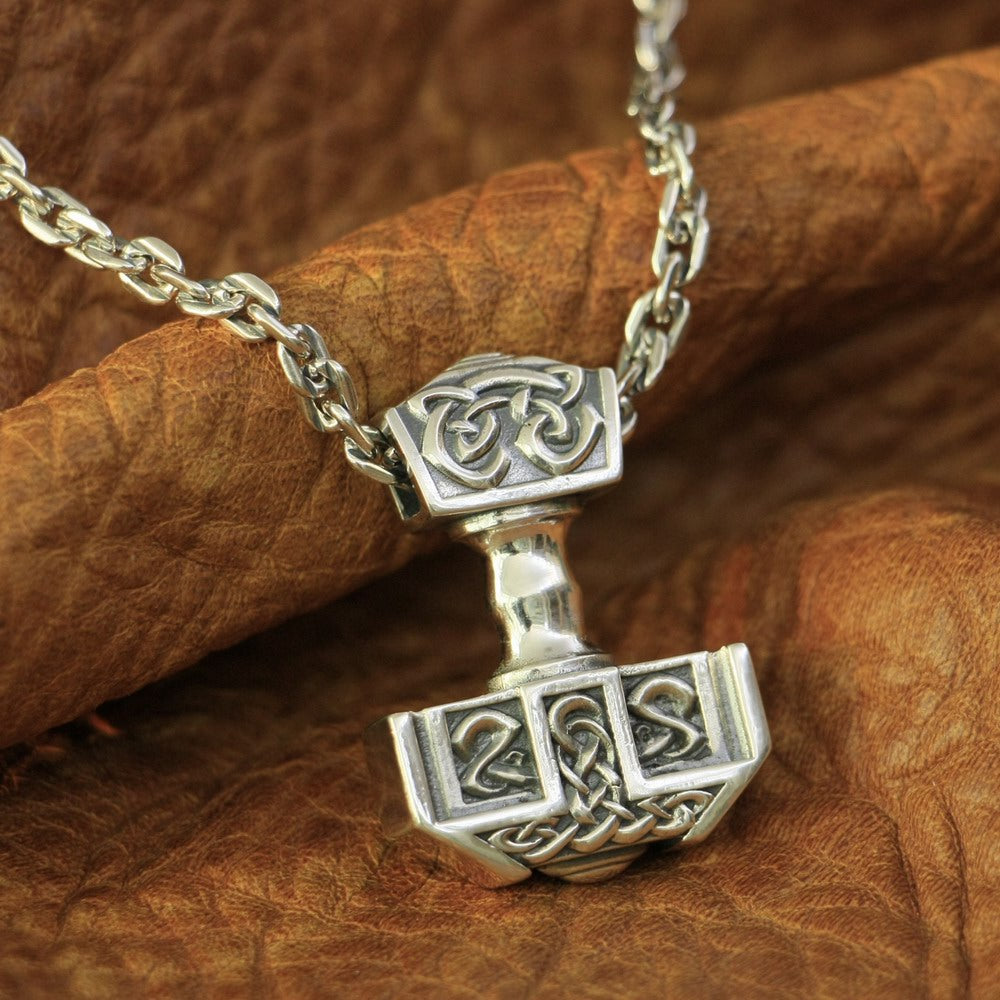
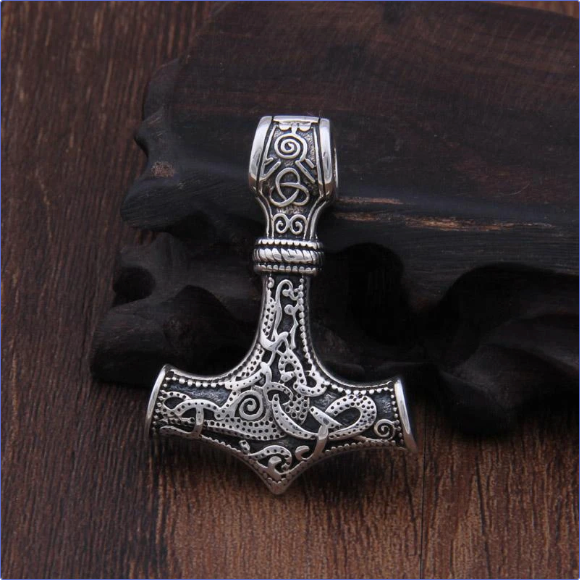
Thor is seen as protector of both Gods and humans. Farmers, sailors, and warriors frequently pray to him for safety, good weather, and successful harvests. Archaeological discoveries have revealed thousands of small hammer-shaped pendants worn as protective amulets during the Viking Age, a practice that endures today.
This widespread popularity explains why Thor remains one of the best-known of the Norse Gods.

2. Thor’s Hammer Has a Name—and a Personality
Everyone knows Thor’s hammer, but many people don’t realize it has its own legendary identity.
Thor’s magical hammer is called Mjölnir, often translated as “crusher” or “lightning weapon.” According to the sagas, it was forged by dwarf craftsmen after a trick orchestrated by Loki (read more about the Creation of Mjolnir here).
Mjölnir has extraordinary powers. It can level mountains, summon lightning, and always returns to Thor’s hand after being thrown.
However, there was one unusual detail: the hammer has a short handle because Loki interfered with its crafting process. Despite this imperfection, Mjölnir became one of the most powerful weapons in the cosmos. A fun fact is that the modern popular idea that Mjolnir was "enchanted" and could only be lifted by the "worthy", is utter nonsense, and not mentioned in the sagas a single time.
In Norse culture, the hammer represents divine protection and blessings, not merely destruction.

3. Thor is Red-Haired—Not Blond
Modern portrayals often depict Thor as tall, blond, and polished, but Norse mythology paints a different picture.
Ancient texts describe Thor as having red hair and a red beard, emphasizing his fiery and tempestuous nature. His appearance reflected the raw power of storms and thunder rather than royal elegance.
This detail surprises many newcomers to the Norse relision because popular entertainment has reshaped public expectations of what Thor “should” look like.
The red-haired depiction aligns closely with Thor’s aggressive personality and elemental power in mythological stories.

4. Thor Has Special Equipment Besides His Hammer
Mjölnir wasn’t Thor’s only magical possession.
Thor also owns:
- Megingjörð, a magical belt that doubles his already considerable strength.
- Járngreipr, iron gloves that allowes him to safely wield Mjölnir.
- A chariot pulled by two enchanted goats named Tanngrisnir and Tanngnjóstr.
The goats served an especially bizarre function. Thor could slaughter and eat them during travels, then resurrect them the next day as long as their bones remained unbroken (read more about the Goats that Pull Thor's Chariot here).
This unusual detail highlights the magical and often strange nature of Norse mythology.
5. Thor Has an Ongoing Rivalry with Giants
One of Thor’s primary roles (and often leisure activities) in the Norse cosmos is battling the jötnar, or giants.
Contrary to modern assumptions, giants are not always gigantic monsters. Many represent chaotic natural forces or dangerous supernatural beings threatening cosmic order.
Thor frequently fought giants to protect both humans and Gods. Stories describe him defeating mountain giants, frost giants, and sea monsters using brute force and strategic cunning.
One famous tale recounts Thor attempting to lift a cat in a giant’s hall—only to discover later that the “cat” was actually the enormous Midgard Serpent disguised through magic (read more here).
These myths reinforce Thor’s reputation as the ultimate defender against chaos.

6. Thursday Is Named After Thor
Here’s a fun fact hidden in plain sight: you probably honor Thor every week without realizing it.
The English word Thursday originates from “Thor’s Day.”
This naming convention dates back to Germanic and Norse influences on language. Similar weekday naming patterns appear in other languages:
- German: Donnerstag (“Thunder Day”)
- Old English: Þūnresdæg (“Thor’s Day”)
The Roman equivalent was dedicated to Jupiter, another thunder God, demonstrating how ancient cultures often linked weekdays to divine beings associated with the sky and storms.
So, every Thursday carries a small piece of Thor’s legacy.
7. Thor Once Dressed as a Bride
One of the strangest and funniest Thor myths involves cross-dressing.
In the poem Þrymskviða, the giant Thrym steals Mjölnir and refuses to return it unless he can marry the Goddess Freyja.
When Freyja refuses, the Gods devise an outrageous plan: Thor disguises himself as a bride to infiltrate the giant’s feast.
Although Thor’s massive appetite and fierce personality nearly expose the deception, Loki cleverly explains away his behavior. Eventually, Thor retrieves Mjölnir and defeats the giants. This story reveals a humorous side of Norse mythology, proving that even mighty Gods sometimes found themselves in absurd situations (read more about the Theft of Mjolnir here).

8. Thor is Connected to Fertility and Agriculture
Most people associate Thor exclusively with thunder and battle, but he also has strong ties to fertility.
Thor’s storms brought rain essential for successful crops. Farmers view him as a protector of agricultural prosperity and family well-being. Marriage ceremonies often include invocations of Thor to bless unions and ensure fertility.
This dual role—destroyer and life-giver—made Thor especially important in societies heavily dependent on farming and seasonal weather patterns.
He isn't merely a warrior God; he is deeply connected to survival and prosperity. Thor is also happily married to the Goddess Sif, and have two sons and a daughter.
9. Thor is Fated to Die During Ragnarök
Even Gods in Norse mythology were not immortal in the traditional sense.
According to prophecy, Thor will meet his end during Ragnarök, the catastrophic final battle signaling the destruction and rebirth of the world.
Thor’s destined opponent is Jörmungandr, the Midgard Serpent, a colossal sea creature that encircles the earth.
In the prophecy, Thor will successfully kill the serpent but only walks nine steps afterward before collapsing from its deadly poison.
Thor goes to battle knowing this.
This tragic ending reflects an important Norse worldview: courage matters even when defeat is inevitable.

10. The Marvel Version of Thor Differs Greatly from Mythology
Although Marvel has introduced Thor to millions of fans, the comic and cinematic versions take major creative liberties.
In Norse religion:
- Thor is red-haired, not blonde.
- Loki is not Thor’s adopted brother but Odin’s blood brother.
- Thor’s personality is rougher, louder, and less regal.
- The Norse Gods were powerful but vulnerable to death.
Marvel blends mythology with superhero storytelling, creating a modern reinterpretation rather than a historical retelling.
That said, the popularity of films and comics has sparked renewed global interest in Norse mythology, inspiring many people to explore the original legends.

Thor embodies qualities people admire across generations: bravery, resilience, strength, and protection.
Yet beyond the thunderbolts and hammer lies a far richer character than many expect. He is a protector of humanity, a God of storms and harvests, a humorous figure in strange adventures, and ultimately a hero who faced destiny head-on.
Whether you know Thor through Norse sagas or modern entertainment, understanding the mythology behind him reveals an even more fascinating story—one shaped by centuries of storytelling, belief, and cultural imagination.
The next time Thursday rolls around, you might remember that you’re carrying a tiny reminder of the legendary God of thunder into your weekly routine.
Bibliographical References
Lindow, John. Norse Mythology: A Guide to Gods, Heroes, Rituals, and Beliefs. Oxford University Press, 2002. ISBN: 978-0195153828
Crossley-Holland, Kevin. The Norse Myths: A Guide to the Gods and Heroes. Pantheon Books, 1980. ISBN: 978-0394748467
Byock, Jesse L. The Prose Edda: Norse Mythology. Penguin Classics, 2005. ISBN: 978-0140447552