
When most people hear the word “Bluetooth,” they think of wireless headphones, smartphones, or the frustration of pairing devices that refuse to cooperate. Few realize that the name comes from one of the most fascinating rulers of the Viking Age: King Harald Bluetooth, a man who reshaped Scandinavian history over a thousand years ago.
The story of Harald Bluetooth is one of political ambition, religious transformation, military power, and a surprising legacy that stretches from the battlefields of tenth-century Scandinavia to the pockets of billions of people today.

A Viking King with a Curious Nickname
Harald “Bluetooth” Gormsson ruled during the late tenth century, approximately from 958 to 986 CE. He was king of Denmark and later extended his influence over parts of Norway. The son of King Gorm the Old and Queen Thyra, Harald inherited a kingdom that was still fragmented and politically unstable.
What immediately catches attention is his unusual nickname: Bluetooth. Historians are not entirely certain where the nickname came from, but the most common theory suggests it referred to a dead or darkened tooth that appeared bluish in color. In Old Norse, Blátǫnn roughly translates to “blue tooth” or “dark tooth.” Another possibility is that the nickname symbolized his skill in communication or diplomacy, though this interpretation is less widely accepted. Yet another - very unlikely - explanation, is that he really liked to eat blueberries, which supposedly stained his teeth blue.
Whatever the reason, the name endured — and centuries later, it would become unexpectedly famous again.

Uniting Denmark: A Political Achievement
Harald Bluetooth is remembered primarily for unifying Denmark. Before his reign, the Danish realm consisted of competing tribal territories and regional leaders with shifting loyalties. Viking society was powerful but decentralized, making political unity difficult to sustain.
Harald worked aggressively to consolidate power. Through military campaigns, strategic alliances, and the strengthening of royal authority, he expanded centralized control over Danish lands. He fortified key settlements and developed defensive systems to secure his kingdom against both internal rebellion and external threats.
One of Harald’s most visible contributions was the construction of ring fortresses — circular military installations strategically positioned across Denmark. Sites such as Trelleborg, Aggersborg, and Fyrkat demonstrate an impressive level of engineering and organization. Their symmetrical design suggests careful planning and a strong central authority.
These fortresses reveal something important about Harald: he was not merely a raider king in the stereotypical Viking mold. He was a state-builder, a ruler thinking about infrastructure, logistics, and administration.
In many ways, Harald helped lay the foundations for what would eventually become the Danish kingdom.

The Christianization of Denmark
Perhaps Harald Bluetooth’s most controversial and transformative act was introducing Christianity to Denmark.
The Viking world during Harald’s early reign remained largely Pagan, but by the tenth century, Christianity was expanding rapidly across Europe. German rulers and missionaries pushed northward, bringing not only religion but also intense political pressure.
According to medieval accounts, Harald converted to Christianity after being persuaded by a missionary named Poppo. One famous story claims Poppo carried hot iron without injury to prove the power of the Christian God. Whether true or legendary, the story reflects the symbolic importance later attached to Harald’s conversion. Regardless of anedoctal stories, the political pressure, both in trade and in threats of war was a strong motivation for the adoption of Christianity.
This decision was not a spiritual one, as Christianity strengthened Harald’s political legitimacy and improved relations with neighboring Christian kingdoms, especially the powerful rulers of the Holy Roman Empire, at the time the most powerful contry in Europe.
However, religious transition rarely occurs without resistance. Many Danes remained loyal to traditional Norse beliefs, creating tension that likely contributed to political instability later in Harald’s reign.

The Jelling Stones: Viking Age Propaganda
If Viking kings had social media, Harald Bluetooth would probably have mastered it.
His greatest public relations achievement still stands today in Denmark: the famous Jelling Stones.
Located in the town of Jelling, these massive rune stones were erected by Harald and his family. One stone, raised by his father Gorm, commemorates Queen Thyra. Harald’s larger stone is especially important because it openly declares his accomplishments.

Its inscription famously states that Harald “won for himself all of Denmark and Norway and made the Danes Christian.”
This is extraordinary historical evidence. In essence, Harald carved his résumé into stone for future generations.
The Jelling Stone is sometimes called “Denmark’s birth certificate” because it marks a turning point in Danish political and religious identity. The monument demonstrates Harald’s political intelligence. By controlling the narrative of his achievements, he strengthened his legitimacy and shaped how history would remember him.
Clearly, it worked.

Conflict, Rebellion, and a Dramatic End
Despite his successes, Harald Bluetooth’s reign did not end peacefully. His growing authority and religious reforms seem to have created opposition among powerful nobles and even within his own family. According to historical tradition, Harald became embroiled in conflict with his son, Sweyn Forkbeard.
Sweyn eventually rebelled against his father, likely with aristocratic support. Sources differ on the details, but Harald appears to have lost power and fled Denmark.
He may have died around 986 or 987 CE after being wounded in battle or during exile in what is now northern Germany.
The dramatic image of a Viking king betrayed by his own son feels almost cinematic — and perhaps fitting for a ruler who spent much of his life balancing power, diplomacy, and change.
Ironically, Sweyn Forkbeard would go on to become one of the most powerful Viking rulers of his era, eventually conquering England and paving the way for the reign of his son, Cnut the Great.

Why Bluetooth Technology Bears His Name
Now for the part most people find surprising: In the 1990s, engineers developing a short-range wireless communication standard needed a temporary codename for the project. One of them, Jim Kardach, had been reading about Harald Bluetooth and proposed the name.
Why Harald?
Because just as Harald Bluetooth united different Danish factions, the technology aimed to unite different electronic devices and communication protocols.
The name stuck.
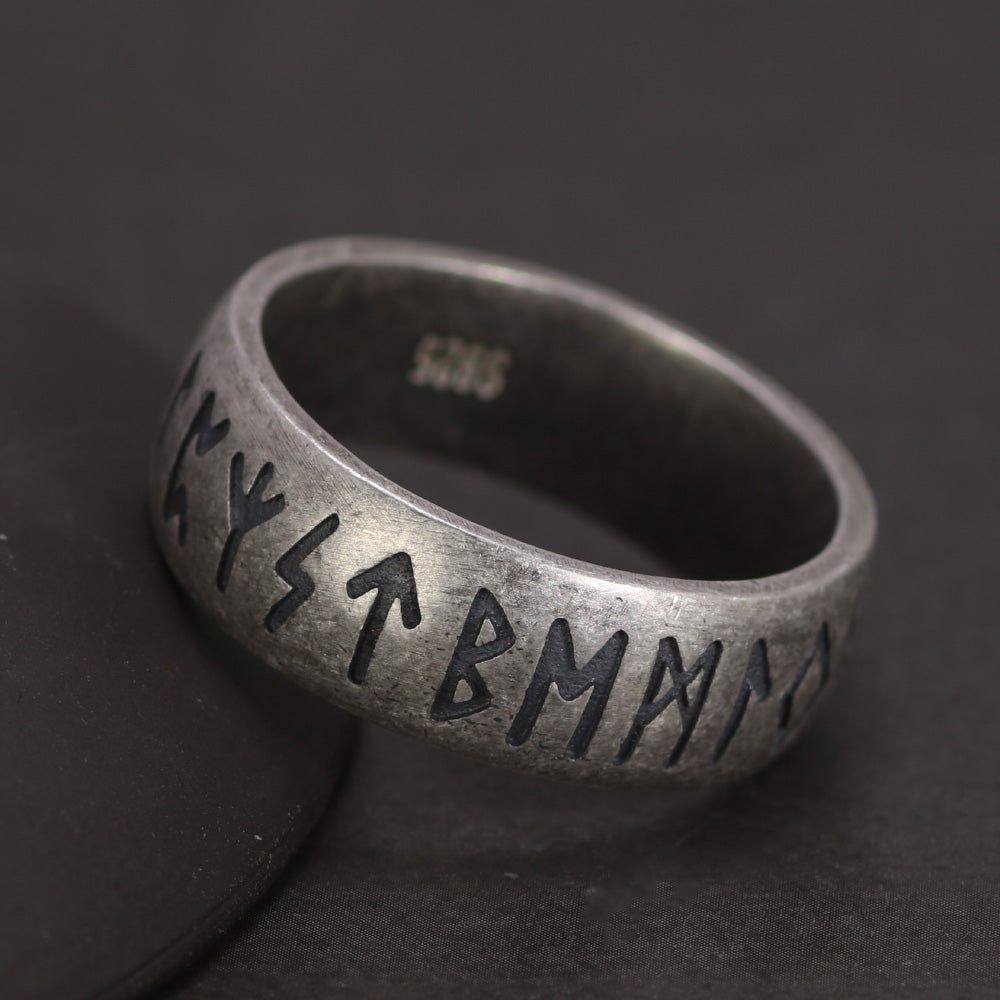
Even the Bluetooth logo reflects this historical connection. It combines two runic letters from Harald’s initials — H and B — taken from the Younger Futhark Viking alphabet.
So every time someone connects wireless earbuds or pairs a keyboard, they are unknowingly invoking the memory of a tenth-century Viking king.
Not bad for a ruler who died over a millennium ago.

A Legacy Beyond the Viking Stereotype
Harald Bluetooth challenges simplistic stereotypes about Vikings as little more than warriors and raiders. He was certainly capable of warfare, but he was also a political strategist, infrastructure builder, religious reformer, and image-conscious ruler.
His reign marked a turning point in Scandinavian history. Through political unification and Christianization, he helped transform Denmark from a loose Viking territory into a kingdom more closely integrated with medieval Europe.
His legacy survives not only in archaeological sites and medieval chronicles but also in one of the most widely used technologies in the world.
Few historical figures can claim to have shaped both medieval state formation and modern smartphone connectivity.
Harald Bluetooth may have ruled with sword and rune stone, but in a strange twist of history, his name now travels invisibly through radio waves across the globe.

Bibliographical References
Sawyer, Peter. The Oxford Illustrated History of the Vikings. Oxford University Press, 2001. ISBN: 978-0192854346
Winroth, Anders. The Age of the Vikings. Princeton University Press, 2016. ISBN: 978-0691169293
Forte, Angelo, Richard Oram, and Frederik Pedersen. Viking Empires. Cambridge University Press, 2005. ISBN: 978-0521829922