
By the year 1000, the Viking world was a complex one. A deeper analysis of the Viking Age—spanning roughly from AD 793 to 1066—reveals a complex, adaptive, and highly connected society. By 1000, the Norse peoples were not only warriors but also traders, settlers, explorers and state builders. Their influence stretched from the icy reaches of Greenland to the rich courts of Constantinople, shaping the political, cultural, and economic landscapes of medieval Europe.

In the early centuries of the Viking Age, Scandinavian seafarers gained notoriety for their lightning-fast raids on monasteries and coastal towns, beginning with the infamous attack on Lindisfarne in 793. These raids were fueled by a combination of demographic pressure, political fragmentation in Scandinavia, and the lure of wealth in the Christian West. However, by the turn of the first millennium, Viking activities had diversified dramatically. Longships—sleek, versatile vessels with shallow drafts—had become symbols of both fear and fascination, enabling Vikings to navigate open seas and inland rivers with equal ease.

Society and Culture: Beyond the Raids
The Norse world was composed of several distinct yet interconnected societies in what are modern-day Norway, Sweden, and Denmark. While they shared linguistic and cultural traits, local variations in law, governance, and social structure were significant. Unlike the centralized monarchies emerging in France and England, Scandinavia was primarily governed by chieftains and regional assemblies known as things. These gatherings served as judicial and political forums where free men could voice grievances, settle disputes, and make collective decisions.
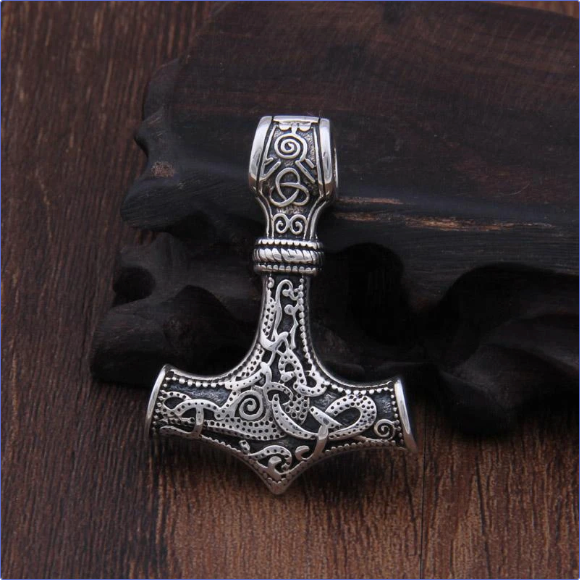
Religion played a central role in Viking life. The Norse pantheon was deeply woven into the fabric of society. Myths and sagas articulated complex worldviews that emphasized honor, courage, and fate. Rituals—including sacrifices at sacred groves and feasting halls—reinforced community bonds. Yet by 1000, contact with Christian Europe had introduced new religious dynamics. In Denmark and Norway, rulers like Harald Bluetooth embraced Christianity as a unifying political force. This conversion did not happen overnight, but reflected broader social shifts as Norse elites sought deeper connections with continental powers. It is important to realize that, while the elite of the society openly began to embrace Christianity, the common people never forgot the old Gods. At home and at the fields, the common folk still called for Thor for protection, or for Freyr for a bountiful harvest or a profitable business.

Economy and Trade: Networks Across Continents
Far from being isolated, Vikings were astute traders who participated in extensive commercial networks. By 1000, their reach extended into the Islamic world, Byzantium, and the British Isles. Scandinavian traders exchanged amber, furs, and walrus ivory for silver, silks, spices, and coins minted in far-flung regions. Archaeological discoveries, such as Arab silver dirhams found in Swedish burial mounds, testify to these long-distance connections.
Key Viking trading hubs developed in strategic locations. Birka, on Lake Mälaren in present-day Sweden, was a cosmopolitan center where merchants from Slavic lands, the Frankish Empire, and the Islamic world converged. Hedeby, near the Danish–German border, functioned as a bustling entrepôt linking Baltic and North Sea trade routes. These towns were more than economic nodes—they were melting pots where ideas, technologies, and cultural practices mixed and spread.

Exploration and Settlement: From Iceland to Vinland
Arguably the most remarkable achievement of the Viking world was its spirit of exploration. By 1000, Norse seafarers had established thriving settlements in Iceland and Greenland. These communities maintained close ties with the Scandinavian homelands while adapting to harsh environments through innovative agricultural practices and robust social networks.
The sagas—semi-legendary narratives written down in later centuries—tell of Viking voyages even farther west. According to these accounts, Leif Erikson, son of Erik the Red, landed in a place called Vinland around the year 1000 (read more about Erik the Red here). While the exact location of Vinland is debated, archaeological evidence from L’Anse aux Meadows in Newfoundland, Canada, confirms Norse presence in North America centuries before Columbus. This early transatlantic contact highlights the extraordinary navigational skills and adventurous spirit of the Viking Age.
Political Transformations and the Rise of Kingdoms
By the year 1000, political structures in Scandinavia were undergoing significant transformations. The era of independent chieftains was gradually giving way to more centralized monarchies. In Denmark, King Sweyn Forkbeard and his successors established dominance over much of the Danish realm and extended influence into England. Norway’s Harald Fairhair (read more about Harald Fairhair here), according to tradition, succeeded in unifying disparate clans under a single crown, laying the foundations for a Norwegian kingdom.
These shifts were not inevitable; they reflected broader changes in how power was exercised. Christianization played a key role, providing monarchs with ideological tools to legitimize authority and align with powerful European neighbors. The adoption of written law codes and the establishment of ecclesiastical institutions also helped consolidate centralized control. Yet in many regions, traditional practices persisted, and the transition was often gradual and negotiated.

Interactions with Europe: Conflict and Integration
Viking interactions with the rest of Europe were multifaceted. Raids continued into the late 10th century, but increasingly Vikings became rulers and defenders of territories. In England, Vikings not only raided but also settled and integrated into local society. The Danelaw—a swath of territory in northern and eastern England under Norse control—became a vibrant cultural zone where Scandinavian and Anglo-Saxon customs merged. Place names, legal practices, and linguistic traces from this period endure in Britain today (read more about the Danelaw here).
In the Frankish realms, Vikings initially presented a formidable challenge. Repeated incursions up the Seine and Loire rivers pressured the Carolingian rulers. However, with time, Viking leaders like Rollo negotiated land grants in exchange for military service, leading to the establishment of Normandy. These Norse-descended rulers eventually became significant players in European politics, culminating in the Norman conquest of England in 1066 (read more about Rollo here).

Daily Life: Families, Crafts, and Social Bonds
Despite the dramatic narratives of battles and voyages, daily life for most of the Norse peoples was anchored in household and community. Farming was the backbone of the economy, and archaeology reveals a sophisticated understanding of crop rotation, animal husbandry, and craft production. Metalworkers, shipbuilders, weavers, and woodworkers contributed to a rich material culture that supported both local needs and long-distance trade.
Family and kinship were central to social identity. Lineage determined obligations and rights, and powerful clans could mobilize warriors or negotiate alliances. While men typically dominated public and military spheres, women in Norse society wielded influence in managing households, overseeing estates, and in some sagas, even participating in exploration and warfare.

Legacy and Transformation
By the year 1000, the Viking world had entered a period of transformation that would culminate in the end of the Viking Age by the mid-11th century. Raiding diminished as European states strengthened defenses, Christianization advanced, and Scandinavian societies integrated more fully into wider medieval Christendom. Yet the legacy of the Vikings endured. Their contributions to maritime technology, settlement patterns across the North Atlantic, and cultural exchanges helped shape the medieval world. The Viking world of 1000 was on the cusp of change, balancing ancestral traditions with emerging identities—a testament to a civilization that both conquered and connected.

Bibliography
Anglo-Saxon England and the Viking Age – James Graham-Campbell (Editor). ISBN: 978-0801471635
The Vikings: A New History – Neil Oliver. ISBN: 978-1250071375
The Oxford Illustrated History of the Vikings – Peter Sawyer (Editor). ISBN: 978-0192854028